
Broken Capillaries on the Face: Treatment Options That Work
Broken Capillaries on the Face: Treatment Options That Work
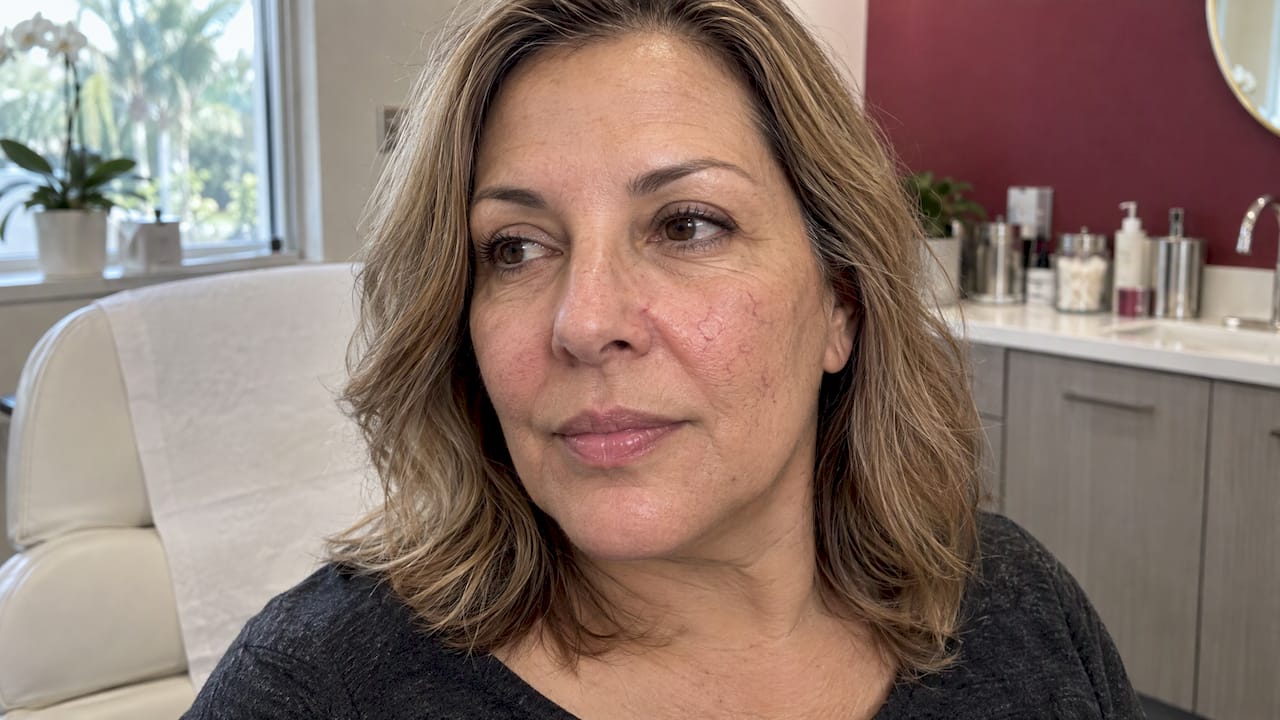
The most reliable way to treat broken capillaries on the face is light-based treatment, which heats the tiny visible vessels so they fade. Creams and makeup can only change how redness looks for a few hours. At Facial Mania Med Spa, we offer IPL photofacial, a light treatment used for redness and uneven tone, and we start with a personal consultation to confirm what you are actually seeing on your skin before we recommend a plan.
TL;DR
- Broken capillaries (telangiectasias) are small, widened blood vessels near the skin surface. Sun, aging, genetics, rosacea and trauma are common causes.
- Light-based treatments are the established option. The American Academy of Dermatology (AAD) reports that most patients see a 50% to 75% reduction in visible vessels after 1 to 3 treatments.
- Sessions are usually 3 to 4 weeks apart, and redness typically fades within about two weeks.
- Treated vessels generally do not return, but new ones can form, so daily sun protection matters.
- Redness that lasts more than two weeks deserves a professional look first, because several conditions look alike.
Table of Contents
- What broken capillaries are, and why they appear
- Is it broken capillaries, rosacea or just flushing?
- How light treatments work on facial vessels
- What results to expect
- Downtime, side effects and who needs extra care
- What happens at a consultation
- What helps between treatments
- Our perspective
- Ready to talk through your redness?
- FAQ
- Sources
What broken capillaries are, and why they appear
A “broken capillary” is not usually broken at all. The medical term is telangiectasia: a small blood vessel that has widened and become visible, often as a thin red or purple line or a web-like patch. They show up most on the nose, cheeks and chin, where skin is thin and exposed.
MedlinePlus, the U.S. National Library of Medicine’s health encyclopedia, lists several skin-related causes: aging, genetic factors, pregnancy, sun exposure, trauma, varicose veins and overuse of steroid creams. Rosacea is also associated with them. The same page says telangiectasias are usually harmless but can sometimes be linked to an underlying disease, which is why it advises contacting a health professional when you notice enlarged vessels in the skin, mucous membranes or eyes.
In practice, most of the faces we see with visible vessels trace back to some mix of the first four: years of sun, a family tendency, hormonal shifts and the thinning of skin that comes with age. In South Florida and Texas, where sun exposure is part of daily life, that sun history adds up.
Is it broken capillaries, rosacea or just flushing?
Before choosing a treatment, it helps to know what you are treating. Three things get mixed up:
- Ordinary flushing comes from heat, exercise, alcohol or emotion and clears within hours or less.
- Rosacea involves redness that lasts longer, sometimes with acne-like breakouts, visible blood vessels, irritated eyes or thickening skin. The AAD’s rosacea overview notes that rosacea-related redness or a violet tone lasts and can become more noticeable with triggers.
- Sun-damaged spider veins are a separate cause of facial redness. The AAD’s guidance on reasons your face is red lists them on their own and says a board-certified dermatologist may treat them with laser.
The practical rule from the same AAD page: if facial redness lasts more than two weeks, see a dermatologist, because many conditions cause redness and each needs a different diagnosis. Rosacea in particular may need medication and a trigger-avoidance plan alongside any light treatment. If you have a new, spreading or painful change, or redness around the eyes, start with a dermatologist or your primary care provider.
While you are working out what is causing the redness, color-correcting makeup can help you get through the day. This guide to choosing a foundation for redness covers formula, finish and shade, and it is a sensible stopgap, not a treatment.
How light treatments work on facial vessels
Vascular light treatments target the red pigment in blood. A 2021 peer-reviewed review of light-based devices explains that these devices heat the blood vessels and reduce their diameter, and that results depend on settings such as wavelength, pulse duration and fluence (the energy delivered). In plain terms: the right device and the right settings for your skin matter more than the brand name on the machine.
Two technologies come up most often:
- Pulsed-dye laser (PDL): a laser tuned to blood vessels.
- Intense pulsed light (IPL): broad-spectrum light, the technology behind photofacials, that is absorbed by redness and brown pigment.
The review calls both commonly used for facial redness and telangiectasia. It also says there are too few large randomized comparisons to declare either one superior.
That fits what a small head-to-head study found. In a 2012 randomized split-face trial of 16 people, one side of each face received PDL and the other IPL, up to two treatments one month apart. Blinded reviewers gave both devices the same mean telangiectasia grade of 3.3 at three months, with no statistically significant difference in efficacy or side effects. It is a small study, but it supports choosing based on your skin and your goals, not on a blanket winner.
A 2022 study of 68 patients in Italy looked at a sequence of vascular laser and IPL treatments and reported average patient satisfaction of 8.15 out of 10 at three months, with no severe side effects. Its authors called for a larger study to confirm the results.
Why IPL suits many faces
Sun-exposed skin rarely has just one concern. The same face that has a few red vessels near the nose often has freckling, sun spots or blotchy tone on the cheeks. IPL treats both redness and pigment in the same visit, which is why it is a natural fit for the patient who wants the whole face to look more even, not just one line erased. You can read more about the treatment on our IPL photofacial page or in our article on the power of IPL.
What results to expect
The AAD’s guidance on lasers and lights gives the clearest numbers for rosacea-related visible vessels:
| Question | What the AAD reports |
|---|---|
| How much improvement? | Most patients see a 50% to 75% reduction in visible vessels; some see complete reduction |
| How many sessions? | Most patients see results after 1 to 3 treatments |
| How far apart? | Usually 3 to 4 weeks |
| How long do results last? | Typically 3 to 5 years |
| Do treated vessels come back? | Generally not, but new vessels may form |
Two honest points about these figures. First, they describe typical outcomes, not a promise for any individual face: vessel size, depth, location and your skin all change the number of sessions. Second, “new vessels may form” is the reason results are measured in years and not forever. If your capillaries came from sun and genetics, those factors keep working in the background.
A worked example: say you have a cluster of fine red lines on each cheek and around the nose wings. A plan might be a first IPL session, a check-in about three to four weeks later to see how much has faded, and one or two more sessions only if vessels remain. You would then protect the area from the sun daily and come back if new vessels appear years later.
Downtime, side effects and who needs extra care
Light treatment is quick, but it is a medical-grade procedure, and knowing what is normal makes it easier to plan around.
What is normal. The AAD says redness commonly fades within two weeks, and red or purple spots usually clear in one to two weeks. You may feel tightening, itching or discomfort during treatment. Across the studies in a 2025 systematic review of energy-based devices, short-term effects included redness, swelling, crusting and blistering, generally resolving within days. Scarring is rare in skilled hands, according to the AAD.
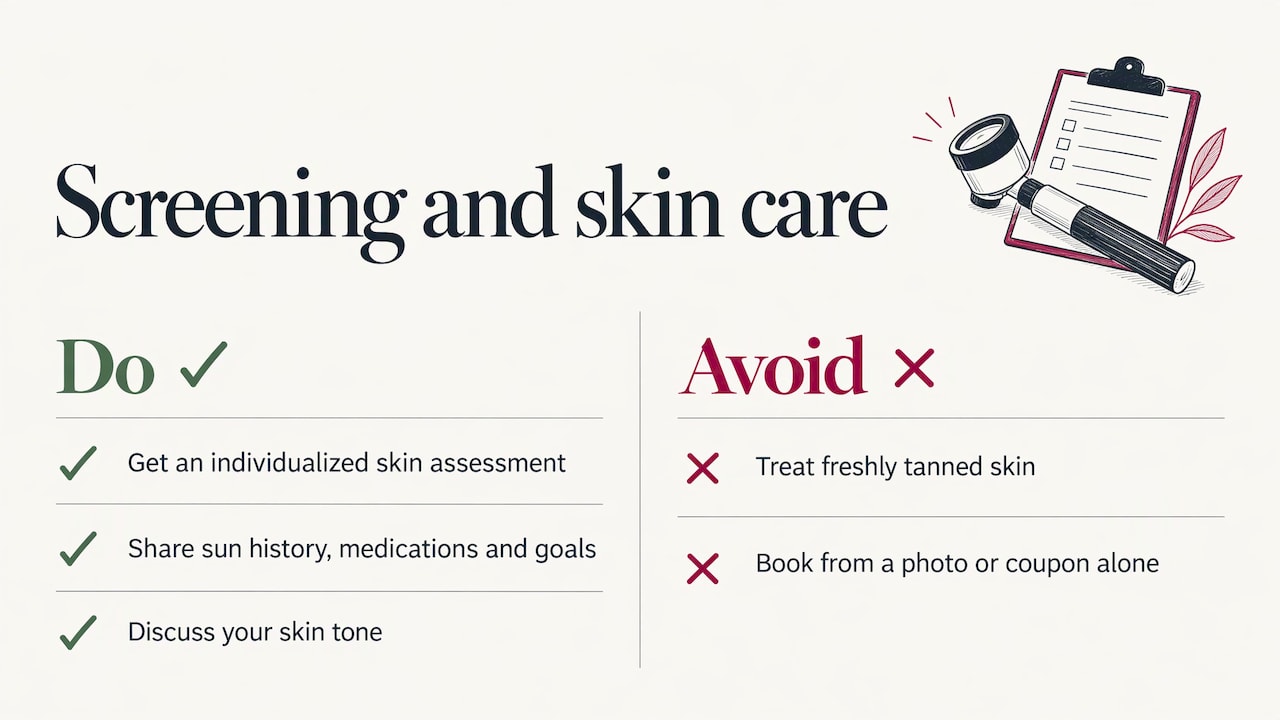
Why skin type and screening matter. The 2021 review notes that IPL can cause blisters, pigment changes or scars, and that patient selection matters, including skin color and ethnicity, because differences in melanin affect the risk of side effects. Tanning is the other big variable: treating freshly tanned skin raises the chance of pigment changes. This is the reason we do not book vessel treatment from a photo or a coupon alone. A consultation lets a licensed professional look at your skin tone, sun history, medications and goals, then set the treatment accordingly.
Cost and insurance. The AAD notes that medical insurance does not cover treatment of sun-damaged facial spider veins. Pricing depends on the area and the number of sessions, and we do not publish a price list online, so the clearest number comes at your consultation.
A note on the evidence. The authors of the 2025 review urge cautious interpretation because many of the trials had small samples, incomplete adverse-event reporting and limited long-term follow-up. That is a reason to rely on an individualized assessment and a staged plan, which is how we work.
What happens at a consultation
If you book with us for redness, this is the sequence to expect:
- A conversation about your history. How long the vessels have been there, whether redness comes and goes, sun exposure, family history, medications and past treatments.
- A look at your skin. Where the vessels are, how fine they are, and whether there is also pigment, texture or breakouts to consider.
- A plan in stages. Our approach is a personal consultation and a plan tailored to each person, so the recommendation reflects your skin, not a package.
- Aftercare instructions. Daily sun protection and avoiding your personal flare-up triggers, which the AAD names as part of care after treatment.
- A recommendation to see a dermatologist when it fits. If what you describe sounds like rosacea needing medication, or like something that should be diagnosed medically first, we will tell you so.
Because we are a one-stop med spa, the plan can also include other things you may be curious about at the same visit, such as facials for skin care between sessions, or injectables and dermal fillers if you want to address lines or volume. Nothing has to be added, and the redness plan stands on its own.
What helps between treatments
Treatment removes the vessels you have, and daily habits influence whether new ones show up.
- Wear sunscreen every day. Sun exposure is one of MedlinePlus’s listed causes, and sun protection is part of the AAD’s aftercare. Make it a broad-spectrum SPF you will actually reapply.
- Learn your triggers if you have rosacea. Heat, alcohol, spicy food and stress are common, but the list is personal. The AAD suggests avoiding what sets off your flare-ups.
- Go gentle. Harsh scrubs and hot water irritate reactive skin.
- Avoid long-term steroid creams on the face unless a clinician prescribed them, since MedlinePlus lists their overuse as a cause.
- Keep a regular skin care routine. A monthly facial plan can keep skin calm and healthy between treatments, and our membership tiers (Amber, Topaz and Diamond) are built around regular visits.
Our perspective
Most people who come to us about broken capillaries have already tried a drawer full of creams. What they usually want is simple: a clear answer about what is going on and a realistic plan.
We build that plan around a personal consultation, because redness is not one condition. The same visible vessel can come from sun, genetics or rosacea, and your skin tone and sun history change how a light treatment should be set up. We would rather take the time to look properly than rush you onto a table.
We also believe in having the whole menu under one roof. Facials, IPL photofacial, laser, injectables and body treatments can sit in one plan, with practitioners who keep up with continuing training. For redness, that means we can treat the vessels, support your skin between sessions and protect the result, without sending you to three different places.
The Facial Mania Med Spa Team
Ready to talk through your redness?
If you have visible vessels on your cheeks, nose or chin and want a clear plan, our team offers IPL photofacial at our Florida and Texas locations, including Plantation and Delray Beach, and we start every plan with a consultation. Start on the IPL photofacial page to find your location and book.

If you would like to pair treatment with regular skin care, look at our Skin Care & Facials page and our membership options.
FAQ
Can broken capillaries on the face go away on their own?
Some fine redness fades when the trigger is removed, but a true widened vessel generally stays visible. MedlinePlus describes telangiectasias as usually harmless, yet if redness lasts more than two weeks the AAD recommends seeing a dermatologist. Light treatment is the option that reduces visible vessels.
How many treatments will I need?
The AAD reports that most patients see results after 1 to 3 sessions, usually 3 to 4 weeks apart. Your exact number depends on how many vessels you have, their size and your skin, which we assess at your consultation.
Is there downtime after treatment?
Expect redness that commonly fades within about two weeks, and red or purple spots that usually clear in one to two weeks, according to the AAD. You may notice tightening or itching. Avoiding sun and tanning before and after treatment helps protect your skin.
Will the capillaries come back?
The AAD says treated vessels generally do not reappear, though new ones may form, and results from vascular treatment tend to last 3 to 5 years. Daily sunscreen and avoiding your rosacea triggers help keep new vessels at bay.
Does insurance cover treatment?
The AAD’s guidance says medical insurance does not cover treatment of sun-damaged facial spider veins. Ask us about costs and payment options when you book your consultation.
Sources
- Telangiectasia: MedlinePlus Medical Encyclopedia
- Rosacea: Overview, American Academy of Dermatology
- 10 reasons your face is red, American Academy of Dermatology
- Lasers and lights: How well do they treat rosacea? American Academy of Dermatology
- Light-Based Devices for the Treatment of Facial Erythema (2021 review)
- Split-face randomized treatment of facial telangiectasia (2012)
- Combination of Specific Vascular Lasers and Vascular IPL (2022)
- Laser and energy-based devices for treating rosacea, systematic review (2025)
- Foundation for Redness: Formula, Finish & Shade